
Introduction
The agrochemical sector is one of the fastest-growing industries in India and globally. With increasing demand for high agricultural productivity, farmers are heavily dependent on chemicals like fertilizers, pesticides, herbicides, fungicides, and plant growth regulators.
Thank you for reading this post, don't forget to subscribe!
Starting an agrochemical business is one of the most profitable opportunities in the agriculture sector today. The best part is—you can start it with low investment if you follow the right strategy.
In this blog, you will learn:
- What is agrochemical business?
- How to start agrochemical business step-by-step?
- Investment required
- Profit margins
- Licenses needed
- Supplier sourcing
- Marketing strategies
- Low-cost profit secrets used by successful dealers
This guide is designed for beginners who want to build a strong agrochemical business from scratch.
What is Agrochemical Business?
An agrochemical business involves buying and selling agricultural chemicals used in farming. These products help farmers increase crop yield, protect crops from pests, and improve soil quality.
Common agrochemical products include:
- Pesticides
- Herbicides
- Fungicides
- Insecticides
- Fertilizers (DAP, Urea, NPK)
- Plant growth regulators
- Biofertilizers
- Micronutrients
You can either:
- Open a retail shop (local market)
- Become a distributor
- Start wholesale trading
- Or sell online (modern model)
Why Agrochemical Business is Highly Profitable
The agrochemical industry is growing rapidly because:
1. High Agricultural Dependency
India is an agricultural country. Farmers always need crop protection products.
2. Repeated Purchase Cycle
Unlike other businesses, agrochemicals are not one-time purchases. Farmers buy them every season.
3. High Demand in Rural Areas
Even small villages have a demand for fertilizers and pesticides.
4. Government Support
The agriculture sector receives subsidies and support, increasing product usage.
5. Low Competition in Rural Markets
Many rural areas still lack organized agrochemical stores.
Step-by-Step Guide: How to Start Agrochemical Business
Step 1: Market Research
Before starting your agrochemical business, understand:
- Local farming crops
- Seasonal demand
- Common pest problems
- Competitor shops
- Pricing trends
Example:
- Wheat & rice areas → fertilizers + herbicides
- Vegetable farming → pesticides + fungicides
Step 2: Choose Your Business Model
You can choose one of the following:
1. Retail Shop (Best for Beginners)
- Sell directly to farmers
- Low investment
- High local trust
2. Wholesale Business
- Supply to retailers
- Higher profit margins
- Needs bigger investment
3. Distributor Model
- Tie up with companies
- Supply in large areas
- Requires license & network
4. Online Agrochemical Business
- Sell via website or marketplaces
- Requires digital marketing
Step 3: Investment Required
You can start a basic agrochemical business with:
Low Investment Setup:
- ₹1.5 lakh – ₹3 lakh (small retail shop)
Medium Setup:
- ₹5 lakh – ₹10 lakh (good inventory + branding)
Large Setup:
- ₹15 lakh+ (distribution business)
Cost breakdown:
- Shop rent: ₹5,000 – ₹20,000/month
- Stock purchase: ₹1 lakh+
- License: ₹10,000 – ₹50,000
- Branding & setup: ₹20,000 – ₹1 lakh
Step 4: Required Licenses
To legally run an agrochemical business, you need:
1. Fertilizer License
Mandatory for selling fertilizers
2. Pesticide License
Required for insecticides & chemicals
3. GST Registration
For billing and taxation
4. Shop Act License
Local business registration
5. Trade License (optional in some states)
Without licenses, you cannot operate legally.
Step 5: Finding Suppliers
Your business success depends on strong supplier connections.
Where to find suppliers:
- Agrochemical manufacturing companies
- Local distributors
- Online B2B platforms
- Agricultural trade fairs
Top product sources:
- Fertilizer companies
- Pesticide manufacturers
- Biofertilizer brands
Always compare prices before buying stock.
Step 6: Setting Up Your Shop
A professional shop increases trust among farmers.
Shop setup tips:
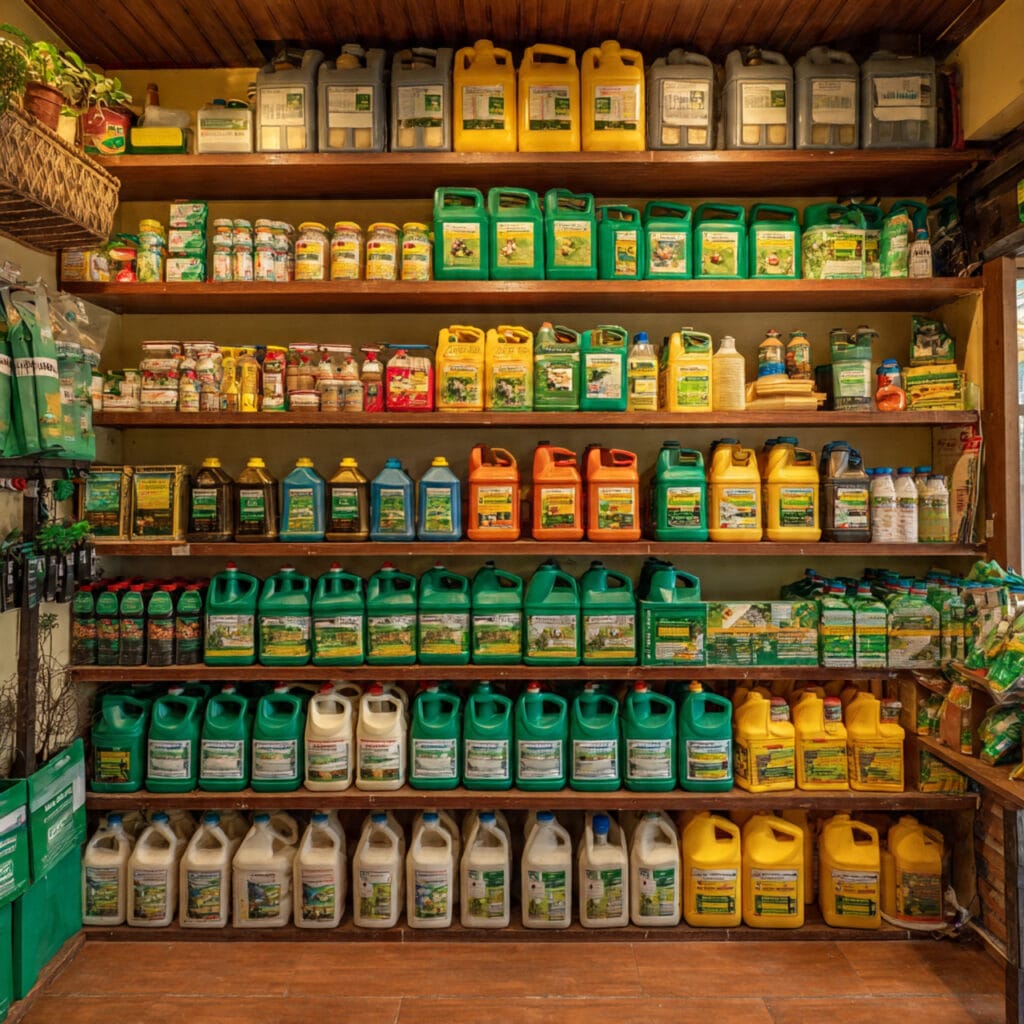
- Keep clean and organized shelves
- Display popular products clearly
- Maintain price list board
- Keep government-approved products only
- Add branding banner outside shop
Step 7: Product Selection Strategy
Don’t stock random products. Focus on:
High-demand products:
- Urea, DAP, NPK fertilizers
- Herbicides for weeds
- Insecticides for crop protection
- Fungicides for diseases
Seasonal planning:
- Kharif season → pesticides demand high
- Rabi season → fertilizers demand high
Step 8: Pricing Strategy (Profit Secret)
Profit in agrochemical business depends on smart pricing.

Typical profit margins:
- Fertilizers: 8% – 15%
- Pesticides: 15% – 35%
- Bio products: 20% – 50%
Smart pricing tips:
- Bundle products (combo offers)
- Offer seasonal discounts
- Give credit to trusted farmers
Step 9: Marketing Strategy
Even in rural areas, marketing is important.
Offline marketing:
- Visit farmers directly
- Build relationships
- Provide free guidance
- Use banners in villages
Online marketing:
- WhatsApp groups
- Facebook farming groups
- Google Business Profile
- Website for online orders
Step 10: Building Trust in Market
Trust is the backbone of agrochemical business.
How to build trust:
- Sell genuine products only
- Avoid fake or duplicate chemicals
- Give proper guidance
- Maintain fair pricing
- Provide after-sale support
Farmers always return to trusted dealers.
Low-Cost Profit Secrets in Agrochemical Business
Now let’s talk about advanced strategies used by successful dealers.
Secret 1: Focus on Fast-Moving Products
Don’t invest in slow-moving inventory. Focus on:
- Urea
- Glyphosate
- Imidacloprid
- NPK fertilizers
Secret 2: Seasonal Stock Planning
Buy stock before season starts:
- Buy pesticides before crop season
- Buy fertilizers before sowing
This increases profit margin.
Secret 3: Credit System Strategy
Farmers often buy on credit.
- Give limited credit only
- Maintain proper records
- Recover payments on time
Secret 4: Direct Company Tie-Ups
Eliminate middlemen and connect directly with companies.
This increases profit by 10–20%.
Secret 5: Value Added Services
Offer extra services:
- Soil testing guidance
- Crop protection advice
- Free consultation
This builds customer loyalty.
Secret 6: Multi-Product Strategy
Don’t depend only on chemicals.
Add:
- Seeds
- Farming tools
- Irrigation products
Challenges in Agrochemical Business
Every business has challenges:
1. High Competition
Many shops already exist in some areas.
2. Price Fluctuation
Government policies affect prices.
3. Credit Risk
Farmers may delay payments.
4. Expiry Products
Some products have a limited shelf life.
How to Overcome Challenges
- Maintain proper inventory system
- Focus on trusted customers
- Regular stock rotation
- Avoid overstocking
Future of Agrochemical Business
The future is very strong because:
- The population is increasing
- Food demand is increasing
- Modern farming is growing
- Organic + chemical farming are both expanding
In the future, the agrochemical business will also shift towards:
- Bio-based chemicals
- Smart fertilizers
- Eco-friendly pesticides
Conclusion
Starting an agrochemical business is one of the most profitable opportunities in the agriculture sector. With low investment, proper planning, and strong supplier connections, you can build a highly successful business.
The key success factors are:
- Right product selection
- Strong farmer relationships
- Seasonal planning
- Trust building
- Smart pricing strategy
If you follow the steps and profit secrets shared in this guide, you can build a strong and scalable agrochemical business in your area.
Frequently Asked Questions (FAQ)
1. What is an agrochemical business?
An agrochemical business involves selling agricultural chemicals like fertilisers, pesticides, herbicides, fungicides, and plant growth regulators that help farmers increase crop production and protect crops from pests and diseases.
2. How to start an agrochemical business in India?
To start an agrochemical business in India, you need to:
- Do market research
- Choose business type (retail, wholesale, or distributorship)
- Get required licenses (fertilizer & pesticide license, GST)
- Find reliable suppliers
- Invest in the initial stock
- Set up a shop and start selling to farmers
3. What is the investment required for an agrochemical business?
The investment depends on scale:
- Small retail shop: ₹1.5 lakh – ₹3 lakh
- Medium business: ₹5 lakh – ₹10 lakh
- Distributor level: ₹15 lakh or more
4. What is the profit margin in the agrochemical business?
Profit margins vary by product:
- Fertilizers: 8% – 15%
- Pesticides: 15% – 35%
- Bio products: 20% – 50%
Overall, the agrochemical business offers good long-term profitability.
5. What licenses are required for the agrochemical business?
You need the following licenses:
- Fertilizer license
- Pesticide license
- GST registration
- Shop Act license
These are mandatory to run a legal agrochemical business in India.
6. Is the agrochemical business profitable in India?
Yes, the agrochemical business is highly profitable in India due to high agricultural demand, seasonal repeat purchases, and increasing use of fertilizers and crop protection products.
7. How do I find suppliers for the agrochemical business?
You can find suppliers through:
- Agrochemical manufacturing companies
- Local distributors
- Agricultural trade fairs
- B2B platforms
- Direct company tie-ups
8. Can I start an agrochemical business with low investment?
Yes, you can start a small agrochemical retail shop with ₹1.5–₹3 lakh. Start with fast-moving products like fertilizers and pesticides, and gradually expand your stock.
9. What products are sold in the agrochemical business?
Common products include:
- Fertilizers (Urea, DAP, NPK)
- Pesticides
- Herbicides
- Fungicides
- Bio fertilizers
- Plant growth regulators
10. What is the future of the agrochemical business?
The future is very strong due to increasing food demand, modern farming techniques, and the rising use of bio-based and eco-friendly agrochemical products.