
Introduction of the Agriculture Export Business
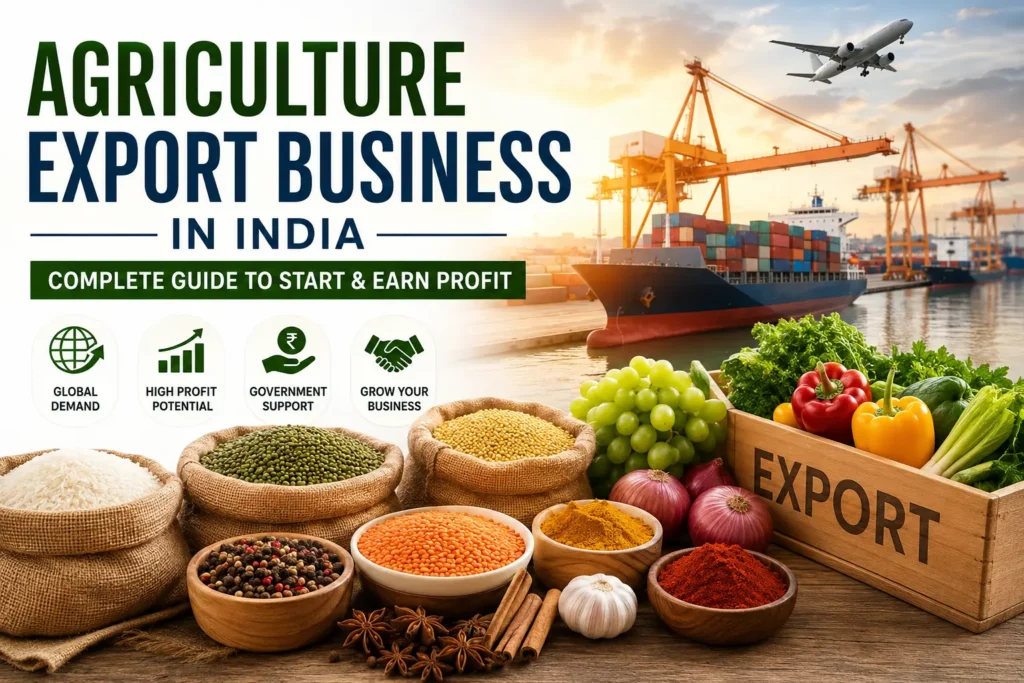
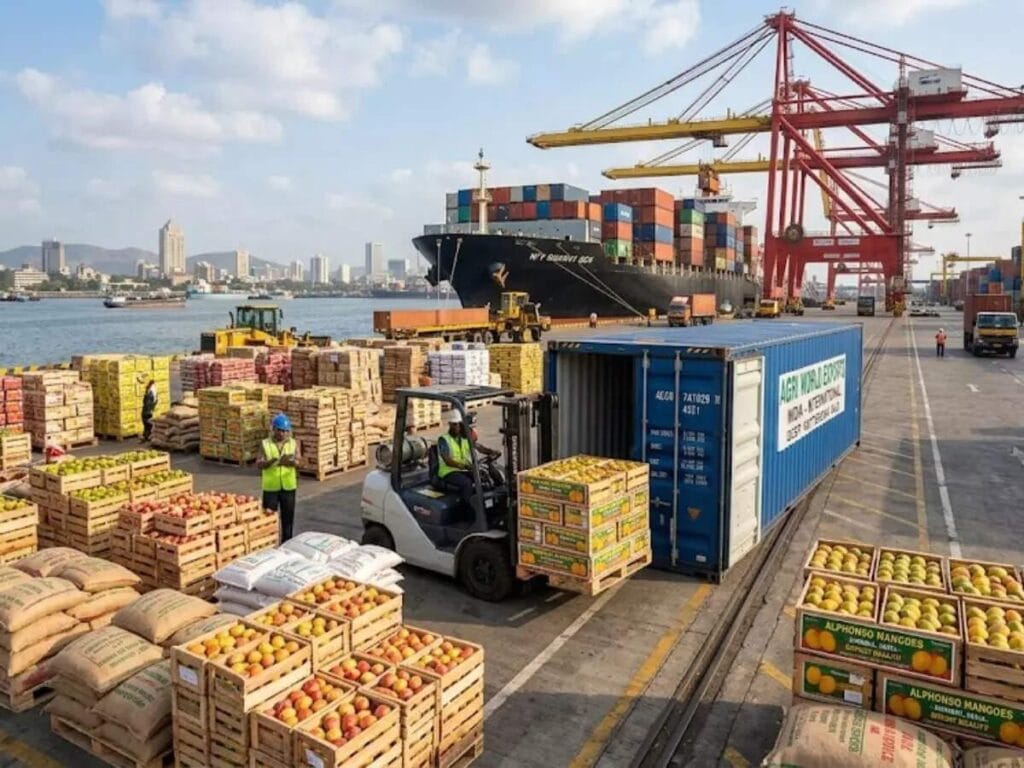
India is one of the world’s largest agricultural producers, supplying fruits, vegetables, spices, cereals, pulses, tea, coffee, and many other farm products to international markets. With increasing global demand for Indian agricultural products, the Agriculture Export Business has become one of the fastest-growing business opportunities in 2026.
Thank you for reading this post, don't forget to subscribe!From small farmers to agripreneurs and startups, many people are entering the export sector because it offers high-profit margins, global market exposure, and long-term business growth. Government support, digital trade platforms, improved logistics, and rising international demand for organic and processed food products have made it easier than ever to start an agriculture export company in India.
If you are planning to start an Agriculture Export Business, this complete guide will help you understand every important step, including licenses, product selection, investment, export procedure, documentation, marketing, risks, profit margins, and future opportunities.
What is the Agriculture Export Business?
The Agriculture Export Business involves selling agricultural products from India to foreign countries. These products can include:
- Fresh fruits
- Vegetables
- Spices
- Rice
- Wheat
- Pulses
- Tea
- Coffee
- Organic products
- Processed food
- Herbal products
- Dry fruits
- Floriculture products
In simple words, when agricultural goods produced in India are supplied to buyers in international markets, it is called agricultural export.
India exports agricultural products to countries like:
- United States
- UAE
- Saudi Arabia
- Bangladesh
- Vietnam
- China
- Germany
- United Kingdom
- Netherlands
- Malaysia
- Singapore
The global demand for Indian agricultural products is continuously increasing due to quality production, competitive pricing, and strong supply capabilities.
Why Start an Agriculture Export Business in India in 2026?
1. Huge Global Demand
Indian agricultural products are highly demanded worldwide because of their quality, taste, and affordability. Products like basmati rice, spices, mangoes, tea, and organic foods have strong international demand.
2. Government Support
The Indian government provides various schemes and incentives for exporters through organizations like:
- APEDA
- DGFT
- MPEDA
- FIEO
- Export Promotion Councils
Export subsidies, training, and financial assistance help beginners enter the export market easily.
3. High Profit Margins
Compared to domestic trading, international markets often offer better pricing and higher margins for quality agricultural products.
4. Growing Organic Market
The demand for organic and chemical-free food products is rapidly growing worldwide. This creates excellent opportunities for Indian exporters.
5. Digital Export Opportunities
Today, exporters can find international buyers through:
- B2B marketplaces
- Trade portals
- Online exhibitions
- Global sourcing platforms
This reduces dependency on traditional middlemen.
Scope of Agriculture Export Business in India
The scope of the Agriculture Export Business in India is massive because India is among the top producers of:
- Rice
- Spices
- Milk
- Fruits
- Vegetables
- Sugar
- Tea
- Cotton
India’s agricultural exports continue to grow every year due to increasing food demand across the globe.
Some fast-growing export categories in 2026 include:
| Product Category | Export Demand |
|---|---|
| Organic Food | Very High |
| Basmati Rice | High |
| Indian Spices | Very High |
| Fresh Fruits | High |
| Processed Foods | Very High |
| Herbal Products | Growing |
| Millets | High |
| Frozen Vegetables | Growing |
The future of the Agriculture Export Business looks very promising, especially for entrepreneurs who focus on quality and international standards.
Best Products for Agriculture Export Business
Choosing the right product is one of the most important factors for export success.
India is one of the largest exporters of rice, especially basmati rice.
Popular Export Markets
- UAE
- Saudi Arabia
- Iran
- USA
- UK
Advantages
- High global demand
- Strong Indian reputation
- Good profit margins
2. Spice Export Business
Indian spices are famous worldwide.
Popular Spices
- Turmeric
- Black pepper
- Cardamom
- Cumin
- Coriander
- Chili powder
Benefits
- High-value products
- Easy packaging
- Long shelf life
3. Fresh Fruit Export
Indian fruits are exported globally.
High-Demand Fruits
- Mango
- Pomegranate
- Banana
- Grapes
Important Requirement
Cold chain logistics are essential.
4. Vegetable Export Business
Fresh vegetables are exported mainly to Gulf countries.
Popular Vegetables
- Onion
- Potato
- Okra
- Green chili
5. Organic Agriculture Export Business
Organic products are becoming extremely profitable in international markets.
Organic Products
- Organic rice
- Organic spices
- Organic tea
- Organic herbs
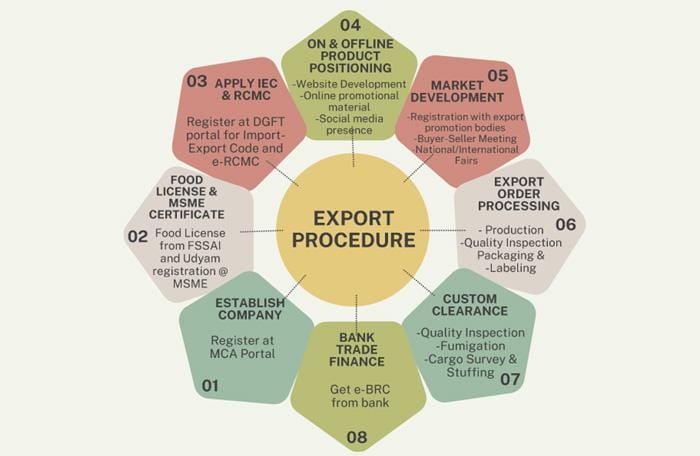
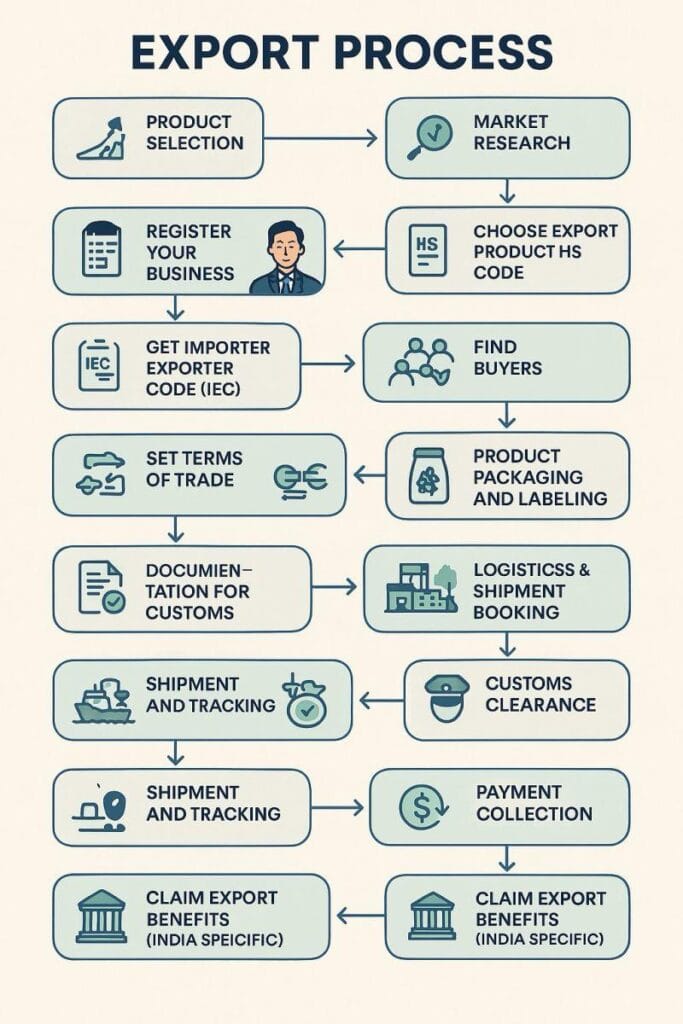
Step-by-Step Process to Start an Agriculture Export Business
Step 1: Research International Market
Before starting your Agriculture Export Business, identify:
- Which products are in demand
- Which countries import those products
- Current international prices
- Competitor analysis
- Quality requirements
Research Sources
- APEDA reports
- Trade fairs
- Export websites
- Government portals
- International trade data
Market research reduces risk and improves profitability.
Step 2: Select the Right Export Product
Choose products based on:
- Demand
- Availability
- Profit margin
- Shelf life
- Export restrictions
- Storage requirements
Beginners should start with products that have:
- Stable demand
- Easier logistics
- Lower spoilage risk
Spices, rice, and processed foods are good beginner options.
Step 3: Register Your Business
You need a legal business entity.
Business Structure Options
- Sole Proprietorship
- Partnership Firm
- LLP
- Private Limited Company
Most exporters prefer:
- LLP
- Private Limited Company
because they provide better credibility in international trade.
Step 4: Obtain the IEC Code
IEC (Import Export Code) is mandatory for export business.
It is issued by DGFT.
Without an IEC, you cannot legally export products from India.
Documents Required
- PAN card
- Aadhaar card
- Bank details
- Business registration documents
The IEC process is mostly online and simple.
Step 5: APEDA Registration
For agricultural exports, APEDA registration is extremely important.
APEDA stands for the Agricultural and Processed Food Products Export Development Authority.
Benefits of APEDA Registration
- Export guidance
- Financial assistance
- Market development support
- Export training
- International exposure
Step 6: Open Current Bank Account
A current account is necessary for international business transactions.
Choose banks that provide:
- Export services
- Foreign exchange support
- International payment solutions
Step 7: Find Reliable Suppliers or Farmers
Your product quality determines export success.
You can source products from:
- Farmers
- FPOs
- Mandis
- Processing units
- Contract farming
Build long-term relationships with suppliers for consistent quality and supply.
Step 8: Product Quality and Packaging
International buyers focus heavily on quality standards.
Important Factors
- Freshness
- Grading
- Hygiene
- Packaging
- Labeling
Good Packaging Should:
- Protect products
- Increase shelf life
- Meet import country standards
For fresh produce, export-quality packaging is essential.
Step 9: Understand Export Documentation
Documentation is one of the most important parts of the Agriculture Export Business.
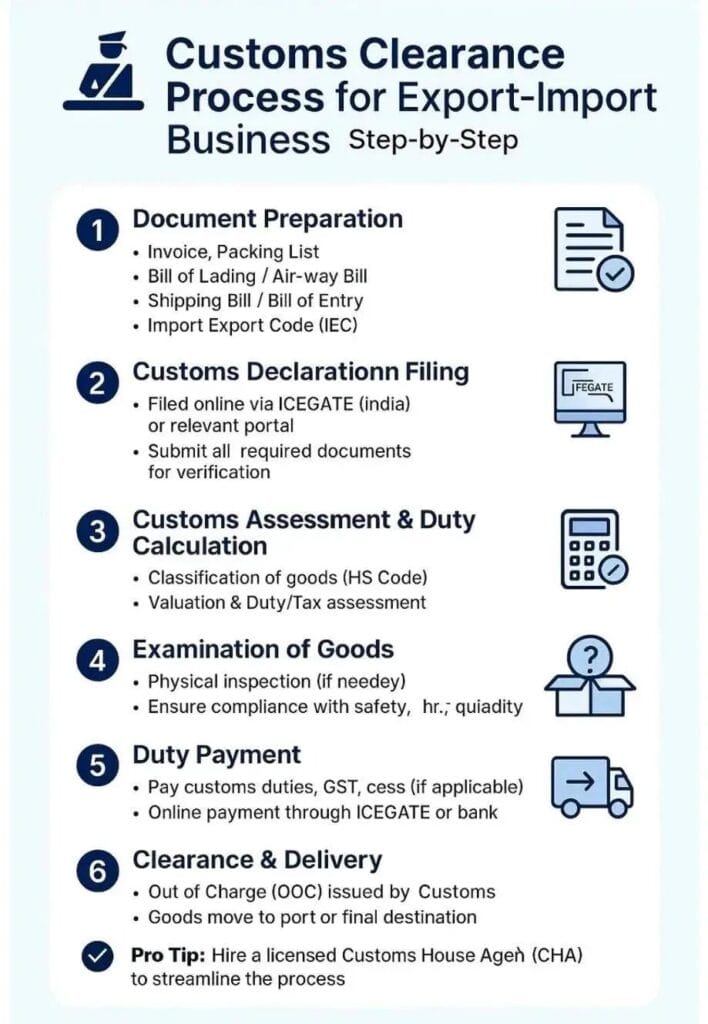
Common Export Documents
Commercial Invoice
Contains buyer and seller information.
Packing List
Details product quantity and packaging.
Bill of Lading
Issued by the shipping company.
Phytosanitary Certificate
Required for plant products.
Certificate of Origin
Specifies the product origin country.
Shipping Bill
Mandatory customs document.
Incorrect documentation can delay shipments.
Step 10: Find International Buyers
Finding buyers is the biggest challenge for beginners.
Best Ways to Find Buyers
B2B Platforms
- Alibaba
- IndiaMART
- TradeIndia
- Global Sources
Trade Fairs
International exhibitions help connect with buyers.
LinkedIn Networking
Useful for B2B business growth.
Export Promotion Councils
They provide buyer-seller opportunities.
Email Marketing
Direct outreach works well in the export business.
How to Export Agricultural Products from India
1. Receive Buyer Inquiry
The buyer requests:
- Product details
- Pricing
- Samples
2. Send Quotation
Quotation includes:
- Product price
- Quantity
- Delivery terms
- Payment conditions
3. Finalize Payment Terms
Popular international payment methods:
- Letter of Credit (LC)
- Advance payment
- Bank transfer
Beginners should prefer advance payments initially.
4. Prepare Shipment
This includes:
- Product sourcing
- Quality inspection
- Packaging
- Documentation
5. Customs Clearance
Custom authorities inspect and approve shipments.
6. Shipping
Products are transported via:
- Sea freight
- Air freight
- Road transport
Sea freight is commonly used for bulk agricultural exports.
Investment Required for Agriculture Export Business
The investment depends on:
- Product type
- Scale
- Packaging
- Storage
- Logistics
Small-Scale Export Business
| Expense | Estimated Cost |
|---|---|
| Registration & License | ₹15,000 – ₹50,000 |
| Packaging | ₹30,000 – ₹1 Lakh |
| Product Purchase | ₹1 – ₹5 Lakh |
| Marketing | ₹20,000 – ₹50,000 |
| Logistics | Variable |
Beginners can start with ₹2 lakh to ₹10 lakh, depending on business scale.
Profit Margin in Agriculture Export Business
Profit margins vary by product.
| Product | Average Margin |
|---|---|
| Spices | 20% – 40% |
| Rice | 10% – 25% |
| Organic Products | 30% – 60% |
| Processed Foods | 25% – 50% |
Export businesses can become highly profitable once strong buyer relationships are established.
Challenges in Agriculture Export Business
1. Quality Issues
Poor quality can lead to shipment rejection.
2. Logistics Problems
Transportation delays can damage perishable goods.
3. Currency Fluctuation
Foreign exchange rates affect profits.
4. International Competition
Global competition is increasing rapidly.
5. Documentation Errors
Incorrect paperwork may delay exports.
Proper planning and quality management reduce these risks.
Tips for Success in Agriculture Export Business
Focus on Product Quality
Quality is the key to repeat orders.
Build Long-Term Buyer Relationships
Trust is very important in international trade.
Learn International Trade Rules
Understand the import regulations of target countries.
Use Digital Marketing
Create:
- Website
- LinkedIn profile
- Export catalogs
- Product brochures
Attend Trade Fairs
Trade fairs help build international business connections.
Start Small and Scale Gradually
Avoid investing huge capital initially.
Future of Agriculture Export Business in India
The future of the Agriculture Export Business in India is extremely bright because:
- Global food demand is rising
- Organic product demand is increasing
- India has a huge agricultural production capacity
- Government export support is improving
- Processed food exports are expanding
By 2030, India is expected to become one of the largest global agricultural export hubs.
Entrepreneurs who focus on:
- Quality
- Branding
- Packaging
- Certifications
- International networking
will achieve strong growth in coming years.
Best Countries for Indian Agriculture Export
UAE
High demand for:
- Fruits
- Vegetables
- Rice
- Spices
USA
Strong market for:
- Organic food
- Spices
- Tea
- Herbal products
Saudi Arabia
Large imports of:
- Rice
- Onion
- Vegetables
Europe
Demand for:
- Organic products
- Processed foods
- Herbal products
Certifications Required in the Agriculture Export Business
Some important certifications include:
FSSAI License
Required for food products.
Organic Certification
Needed for organic exports.
Phytosanitary Certification
Mandatory for plant products.
ISO Certification
Improves business credibility.
Digital Marketing for Agriculture Export Business
Digital marketing can help exporters attract global buyers.
Important Marketing Methods
SEO Website
Create a professional export website targeting keywords like:
- Agriculture Export Business
- Agricultural Export from India
- Indian Spice Exporter
- Rice Export Company
LinkedIn Marketing
LinkedIn is powerful for B2B export networking.
Email Outreach
Send product catalogs to importers.
Google Business Profile
Improves trust and visibility.
Common Mistakes Beginners Should Avoid
Choosing Wrong Products
Always research market demand first.
Ignoring Quality Standards
International buyers expect premium quality.
Poor Packaging
Bad packaging damages products and reputation.
Lack of Market Research
Never export without studying buyer demand.
Depending on the Single Buyer
Diversify the buyer network for business safety.
Conclusion
Starting an Agriculture Export Business in India in 2026 is one of the best opportunities for agripreneurs, traders, startups, and farmers who want to enter international markets. With rising global demand, government support, and increasing digital trade opportunities, agricultural exports offer excellent growth potential and profitability.
Success in the Agriculture Export Business depends on:
- Product quality
- Proper documentation
- Reliable suppliers
- Strong buyer relationships
- Smart marketing
- International standards compliance
Beginners should start with proper market research, choose high-demand products, obtain necessary licenses, and focus on building trust with international buyers.
If managed professionally, the Agriculture Export Business can become a highly profitable and scalable long-term business in India.
Frequently Asked Questions (FAQs)
1. What is the Agriculture Export Business?
Agriculture export business means selling Indian agricultural products such as rice, spices, fruits, vegetables, and organic products to international markets.
2. Is the Agriculture Export Business profitable in India?
Yes, the agriculture export business is highly profitable because international markets usually offer better prices and higher demand compared to local markets.
3. Which agricultural products are best for export from India?
Products like basmati rice, spices, onion, mango, pomegranate, tea, coffee, millets, and organic vegetables are highly demanded globally.
4. What is IEC code in export business?
IEC (Import Export Code) is a mandatory registration issued by DGFT that allows businesses to import or export products internationally.
5. Is APEDA registration necessary for agricultural export?
Yes, APEDA registration is highly recommended for agricultural product exporters because it provides export support, training, and government benefits.
6. How much investment is required to start an agriculture export business?
You can start a small-scale agriculture export business with an investment of around ₹50,000 to ₹2 lakh depending on the product and business model.
7. Can farmers directly export agricultural products?
Yes, farmers and FPOs can directly export products after completing the required registrations, like IEC and APEDA.
8. Which countries import agricultural products from India?
Major importing countries include UAE, USA, Saudi Arabia, the UK, Canada, Singapore, Germany, and Australia.
9. How can I find international buyers for export business?
You can find buyers through B2B websites, LinkedIn, trade fairs, export directories, social media marketing, and your business website.
10. What are the biggest challenges in agriculture export business?
Common challenges include finding genuine buyers, maintaining product quality, export documentation, shipping delays, and international competition.
11. Which agricultural export products provide the highest profit?
Spices, organic food products, processed food, herbal products, and specialty rice usually provide higher profit margins.
12. Do I need GST registration for export business?
Yes, GST registration is important for export documentation, invoicing, and business compliance.
13. What is the future of Agriculture Export Business in India?
The future is very strong because global food demand, organic product demand, and government support for exports are increasing rapidly.
14. Can beginners start an agriculture export business?
Yes, beginners can start with small investments using supplier-based or trader-based export models.
15. How important is packaging in export business?
Packaging is extremely important because it protects products, improves shelf life, and creates a professional impression for international buyers.