
Brinjal (Eggplant) is one of the most widely cultivated vegetable crops across Asia, Africa, and many tropical regions of the world. It is valued for its high productivity, nutritional benefits, and market demand. However, one of the most destructive pests affecting brinjal cultivation is the Brinjal Stem Borer, commonly known as the Brinjal Shoot and Fruit Borer.
Thank you for reading this post, don't forget to subscribe!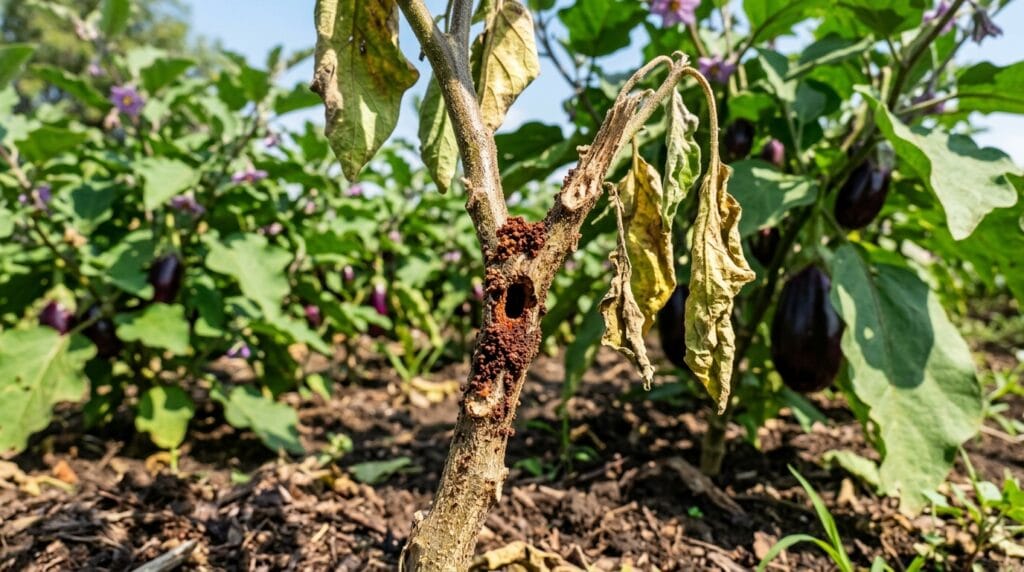
This pest can cause severe economic losses if not managed properly. Farmers often notice healthy-looking plants suddenly wilting, drying branches, and damaged fruits without understanding the actual cause. In many cases, the culprit is hidden inside the stem, making early detection difficult.
In this comprehensive guide, we will discuss everything you need to know about Brinjal Stem Borer, including identification, lifecycle, symptoms, damage, prevention strategies, organic control methods, chemical control options, and integrated pest management practices.
What is Brinjal Stem Borer?
Brinjal Stem Borer is a destructive insect pest that attacks brinjal plants during different growth stages. The pest bores into young shoots, stems, flower buds, and fruits, causing significant yield losses.
The larvae are the damaging stage of the insect. After hatching, they enter plant tissues and feed internally, making them difficult to control through conventional spraying methods.
Scientific Name
Leucinodes orbonalis
Common Names
- Brinjal Stem Borer
- Brinjal Shoot and Fruit Borer
- Eggplant Stem Borer
- Eggplant Shoot Borer
This pest is considered one of the most serious constraints in profitable brinjal cultivation.
Economic Importance
Brinjal Stem Borer can reduce marketable yield by 30% to 70% depending on infestation levels and management practices.
Major losses occur due to:
- Wilting of young shoots
- Reduced flowering
- Fruit damage
- Lower fruit quality
- Reduced market value
- Increased production costs
In severe infestations, farmers may lose a substantial portion of their harvest.
Identification of Brinjal Stem Borer
Proper identification is the first step in effective pest management.
Adult Moth
The adult stage is a small moth with:
- White body
- Pinkish or brown markings
- Wingspan of approximately 20–24 mm
- Active mainly during evening and night
Eggs
- Creamy white color
- Laid singly or in small groups
- Found on leaves, shoots, flowers, and fruits
Larvae
The larval stage causes actual damage.
Characteristics include:
- Creamy white body
- Brown head capsule
- Soft-bodied caterpillar
- Length up to 20 mm when fully grown
Pupae
Pupation occurs in plant debris, dried leaves, or crop residues.
Lifecycle of Brinjal Stem Borer
Understanding the lifecycle helps in planning effective control measures.
Egg Stage
Female moths lay eggs on various plant parts.
Duration:
3–5 days
Larval Stage
After hatching, larvae immediately bore into shoots and fruits.
Duration:
10–15 days
Pupal Stage
The larvae transform into pupae in crop residues.
Duration:
7–10 days
Adult Stage
Adult moths emerge and continue the cycle.
The complete lifecycle typically takes 20–30 days depending on environmental conditions.
Damage Symptoms in Brinjal Plants
Recognizing symptoms early can significantly reduce crop losses.
1. Wilting of Young Shoots
This is often the first visible symptom.
Larvae enter tender shoots and feed internally, causing:
- Drooping shoots
- Wilting branches
- Drying of growing points
2. Holes in Stems
Small entry holes may be visible on stems.
These holes often contain:
- Frass (insect excreta)
- Sawdust-like material
3. Dry Branches
Affected branches stop growing and eventually dry out.
4. Flower Damage
Larvae may attack flower buds, reducing fruit formation.
5. Fruit Damage
The pest bores directly into developing fruits.
Symptoms include:
- Entry holes on fruits
- Frass near holes
- Internal feeding tunnels
- Premature fruit drop
6. Reduced Yield
Infested plants produce fewer marketable fruits, resulting in significant yield losses.
Why Brinjal Stem Borer is Difficult to Control
Many farmers struggle to manage this pest because:
- Larvae remain hidden inside stems and fruits.
- Contact insecticides cannot reach the larvae easily.
- Multiple generations occur during the growing season.
- Continuous infestation pressure exists.
Therefore, integrated management is essential.
Preventive Measures
Prevention is always better than cure.
Use Healthy Seedlings
Always select disease-free and pest-free seedlings.
Crop Rotation
Avoid planting brinjal continuously in the same field.
Rotate with:
- Legumes
- Cereals
- Non-solanaceous crops
Field Sanitation
Remove:
- Infested shoots
- Damaged fruits
- Crop residues
This reduces pest population significantly.
Proper Spacing
Maintain recommended plant spacing to improve airflow and reduce pest buildup.
Balanced Fertilization
Excess nitrogen promotes lush growth that attracts pests.
Use balanced nutrient management.
Organic Control of Brinjal Stem Borer
Many gardeners and organic farmers prefer non-chemical methods.
Neem Oil Spray
Neem oil is highly effective against early-stage infestations.
Recommended concentration:
3–5 ml neem oil per liter of water
Spray every 7–10 days.
Neem Seed Kernel Extract (NSKE)
NSKE is widely used in organic farming.
Benefits:
- Repels adult moths
- Reduces egg laying
- Suppresses larval development
Pheromone Traps
Pheromone traps are highly effective for monitoring and reducing moth populations.
Recommended:
20–25 traps per hectare
Benefits:
- Early detection
- Reduced mating
- Lower pest pressure
Manual Removal
Regularly inspect plants and remove:
- Infested shoots
- Damaged fruits
Destroy them away from the field.
Biological Control
Natural enemies help suppress pest populations.
Examples include:
- Trichogramma species
- Braconid parasitoids
- Predatory insects
Conserving beneficial insects is an important component of integrated pest management.
Chemical Control of Brinjal Stem Borer
When infestation exceeds economic threshold levels, chemical intervention may be necessary.
Emamectin Benzoate
One of the most effective insecticides against Brinjal Stem Borer.
Benefits:
- Strong larval control
- Good residual activity
- Widely recommended
Always follow label recommendations and local agricultural guidelines.
Spinosad
Spinosad is another effective option.
Advantages:
- Good efficacy
- Lower impact on beneficial insects
Chlorantraniliprole
Provides excellent control of caterpillar pests.
Benefits:
- Long-lasting protection
- Effective against hidden larvae
Important Safety Tips
- Follow label instructions carefully.
- Wear protective equipment.
- Observe pre-harvest intervals.
- Avoid excessive pesticide use.
- Rotate insecticides to prevent resistance.
Integrated Pest Management (IPM) for Brinjal Stem Borer
Integrated Pest Management combines multiple strategies for sustainable control.
IPM Components
- Healthy seedlings
- Field sanitation
- Crop rotation
- Pheromone traps
- Regular monitoring
- Removal of infested shoots
- Neem-based products
- Biological control
- Judicious chemical use
This approach provides the most reliable long-term control.
Monitoring and Scouting
Regular monitoring is essential.
Inspect fields weekly for:
- Wilted shoots
- Entry holes
- Frass deposits
- Damaged fruits
- Adult moth activity
Early detection greatly improves control success.
Common Mistakes Farmers Make
Delayed Action
Waiting too long allows larvae to spread throughout the field.
Ignoring Infested Shoots
Infested shoots become breeding centers for future generations.
Over-Reliance on Chemicals
Excessive spraying often leads to resistance development.
Poor Field Hygiene
Crop residues can harbor pest populations.
Best Time to Control Brinjal Stem Borer
The best results are achieved when control measures target early larval stages before they enter stems and fruits.
Key periods:
- Early vegetative stage
- Flower initiation stage
- Early fruiting stage
Regular scouting during these stages is critical.
Yield Improvement Through Proper Pest Management
Effective management of Brinjal Stem Borer can:
- Increase marketable yield
- Improve fruit quality
- Reduce pesticide expenses
- Enhance profitability
- Improve farmer income
Fields managed through integrated pest management often outperform fields relying solely on chemical sprays.
Frequently Asked Questions
What causes sudden wilting in brinjal plants?
One common reason is Brinjal Stem Borer infestation. Larvae feed inside shoots, blocking water movement and causing wilting.
Can neem oil control stem borer?
Neem oil can help suppress early infestations and reduce egg laying but may not completely control severe infestations alone.
Which insecticide is most effective?
Products containing Emamectin Benzoate, Spinosad, or Chlorantraniliprole are commonly recommended, subject to local regulations and label directions.
How often should pheromone traps be checked?
At least once every week.
Can stem borer damage fruits?
Yes. The pest attacks both shoots and fruits, reducing market quality and yield.
Conclusion
Brinjal Stem Borer is one of the most destructive pests affecting eggplant cultivation worldwide. The pest damages shoots, stems, flowers, and fruits, causing severe yield losses and reducing profitability. Early detection, regular monitoring, field sanitation, pheromone trapping, neem-based products, biological control agents, and carefully selected insecticides are essential for successful management.
Farmers and home gardeners who adopt an Integrated Pest Management approach can significantly reduce crop damage while minimizing pesticide dependence. By combining preventive measures with timely interventions, it is possible to protect brinjal crops, improve fruit quality, and maximize yield.
If you found this guide helpful, continue following Green Vanta Agri Hub for practical farming tips, pest management strategies, and profitable agriculture insights.